Abstract: Ventilation systems handling high-temperature exhaust, abrasive dust, or corrosive fumes demand more than a standard soft-seal valve can offer. This technical examination explores the design principles, material science, and operational characteristics of metal-to-metal sealing technology in butterfly valves. It covers eccentric disc geometry, flexible metal seat deformation, torque considerations for actuator sizing, and the critical differences between hard and soft seal designs. Engineers specifying isolation for boiler flue gas, kiln exhaust, or industrial ventilation will find practical guidance on material pairing, temperature limits, and installation practices that determine long-term sealing integrity.
- What Distinguishes a Ventilation Hard Seal Butterfly Valve from Soft-Seal Designs?
- How Does Metal-to-Metal Sealing Actually Work?
- Which Materials Survive Extreme Ventilation Conditions?
- Why Torque and Actuation Demand Extra Attention
- What Installation Practices Prevent Premature Failure?
- Frequently Asked Questions
01 What Distinguishes a Ventilation Hard Seal Butterfly Valve from Soft-Seal Designs?
The fundamental difference lies in what happens at the sealing interface. A soft-seal butterfly valve relies on an elastomeric seat—EPDM, NBR, or PTFE—that compresses against the disc to create a bubble-tight closure. These materials perform admirably in clean air and moderate temperatures. But introduce 400°C flue gas or abrasive particulate matter, and the elastomer degrades rapidly, losing its resilience and sealing capability [citation:7].
A Ventilation Hard Seal Butterfly Valve takes a different approach entirely. Both sealing surfaces—the disc edge and the seat ring—are metallic. Sealing occurs through the controlled elastic deformation of a thin, flexible metal seat under closing force. There is no polymer to melt, swell, or abrade away. The result is a valve that maintains isolation integrity across temperature ranges that would destroy soft-seal alternatives [citation:7].
Temperature Ceiling
Hard seal designs routinely handle 400°C to 600°C, with specialized alloys extending beyond. Soft seals typically max out around 200°C [citation:7][citation:13].
Abrasion Resistance
Metal seating surfaces resist erosion from fly ash and particulate matter far better than elastomers, which can be gouged or torn [citation:13].
Eccentric Geometry
Triple-offset designs lift the disc off the seat immediately upon opening, eliminating sliding friction and wear during operation [citation:7].
This distinction matters most in ventilation applications where the medium is not clean, conditioned air. Boiler flue gas carries ash. Kiln exhaust carries grit. Chemical ventilation carries corrosive compounds. In these environments, the elastomer in a soft-seal valve becomes the weakest link—the component that dictates maintenance intervals and unplanned downtime.
02 How Does Metal-to-Metal Sealing Actually Work?
The sealing action in a hard-seal butterfly valve is a carefully orchestrated interaction between geometry, material elasticity, and closing force. Understanding it explains why these valves demand higher actuation torque yet deliver superior longevity in harsh service.
The Role of Eccentricity
In a triple-offset design, the disc is positioned with three distinct offsets from the shaft centerline: axial, radial, and angular. This geometry creates a cam-like motion. As the disc rotates toward the closed position, it does not begin contacting the seat until the final few degrees of travel. At that point, it wedges into the seat with a slight interference fit. Upon opening, the disc lifts off the seat immediately, breaking contact before any sliding occurs [citation:7].
The practical consequence is that the sealing surfaces experience virtually no rubbing friction during normal operation. Wear is minimized. The seat retains its precision-machined profile far longer than a design where the disc scrubs across the seat with every cycle.
The Flexible Metal Seat
The seat ring itself is not a rigid block of steel. It is a thin, resilient metallic component—often stainless steel or a nickel-based alloy—designed to flex slightly under the disc’s closing force. This elastic deformation allows the seat to conform to the disc edge, compensating for minor manufacturing tolerances, thermal distortion, and the inevitable small variations in disc position [citation:7].
Think of it as a metallic spring that remembers its shape. When the disc presses into it, the seat deflects by a few thousandths of an inch. When the disc retracts, the seat springs back. This controlled flexibility is what makes metal-to-metal sealing viable at all—without it, two rigid metal surfaces would need impossibly perfect alignment to seal reliably.
- Disc edge: Precision-machined to a specific angle, often with a slight spherical or conical profile to optimize contact stress.
- Seat ring: Thin-section metal with controlled elasticity, surface-finished to mate with the disc edge.
- Interference: The closing force creates a calculated interference that generates sealing stress without exceeding the material’s elastic limit.
- Thermal compensation: Material selection and machining tolerances account for differential expansion between disc and seat at operating temperature [citation:7].
03 Which Materials Survive Extreme Ventilation Conditions?
Material selection for a ventilation hard seal butterfly valve is not a simple checklist exercise. It requires matching the valve’s components to the specific temperature, corrosivity, and abrasiveness of the gas stream—while also considering how those materials behave together as a sealing pair.
| Service Condition | Recommended Body Material | Seat Material | Temperature Limit |
|---|---|---|---|
| Standard ventilation, clean air | Carbon steel with epoxy coating | Stainless steel 304 | Up to 400°C |
| Corrosive chemical exhaust | Stainless steel 316 | Stainless steel 316 | Up to 500°C |
| Marine or coastal ventilation | Duplex stainless steel | Duplex stainless steel | Up to 500°C |
| High-temperature flue gas | Heat-resistant alloy steel | Nickel-based alloy | 600°C+ |
| Abrasive dust-laden air | Carbon steel with hardened internals | Hardened stainless steel | Up to 450°C |
The table above provides a starting framework, but the critical decision is often the pairing of disc and seat materials. If the disc expands more than the seat at operating temperature, the valve may jam closed or require excessive torque to operate. If the disc expands less, the sealing interference diminishes and leakage paths open. Manufacturers address this by selecting material pairs with compatible thermal expansion coefficients and by machining the components to tolerances that account for the expected operating temperature [citation:7].
For temperatures exceeding 600°C, standard stainless steels begin to lose strength and oxidation resistance. In these cases, nickel-based alloys such as Inconel become necessary. These materials maintain their mechanical properties at temperatures where carbon steel would creep and stainless steel would scale. The trade-off is cost and machinability—nickel alloys are significantly more difficult to machine to the precision required for sealing surfaces.
04 Why Torque and Actuation Demand Extra Attention
Anyone accustomed to soft-seal butterfly valves will notice the difference immediately: a hard-seal valve requires substantially more torque to operate. This is not a design flaw. It is the direct consequence of achieving a metal-to-metal seal.
The torque profile of a hard-seal butterfly valve has three distinct phases, each requiring different considerations for actuator sizing [citation:7]:
- Breakaway torque: The torque needed to initiate opening from the fully closed position. This is typically the highest value, as it must overcome the static friction of the interference fit and any thermal binding that has developed.
- Running torque: The torque required to move the disc through its travel once it has separated from the seat. This is generally lower and relatively consistent.
- Seating torque: The torque required to drive the disc into the seat and achieve the designed interference. Insufficient seating torque leaves a leakage path; excessive torque can overstress the seat or disc edge.
Actuator sizing must account for the maximum of these three values, with a safety margin typically specified as 1.5 to 2.0 times the calculated maximum torque [citation:7]. An undersized actuator will fail to fully seat the valve, producing leakage that may not be immediately obvious but will worsen over time as the seat and disc wear unevenly.
Sizing Rule
Actuator output should exceed calculated maximum torque by 50–100%. Never size at exactly the calculated value.
Gear Operators
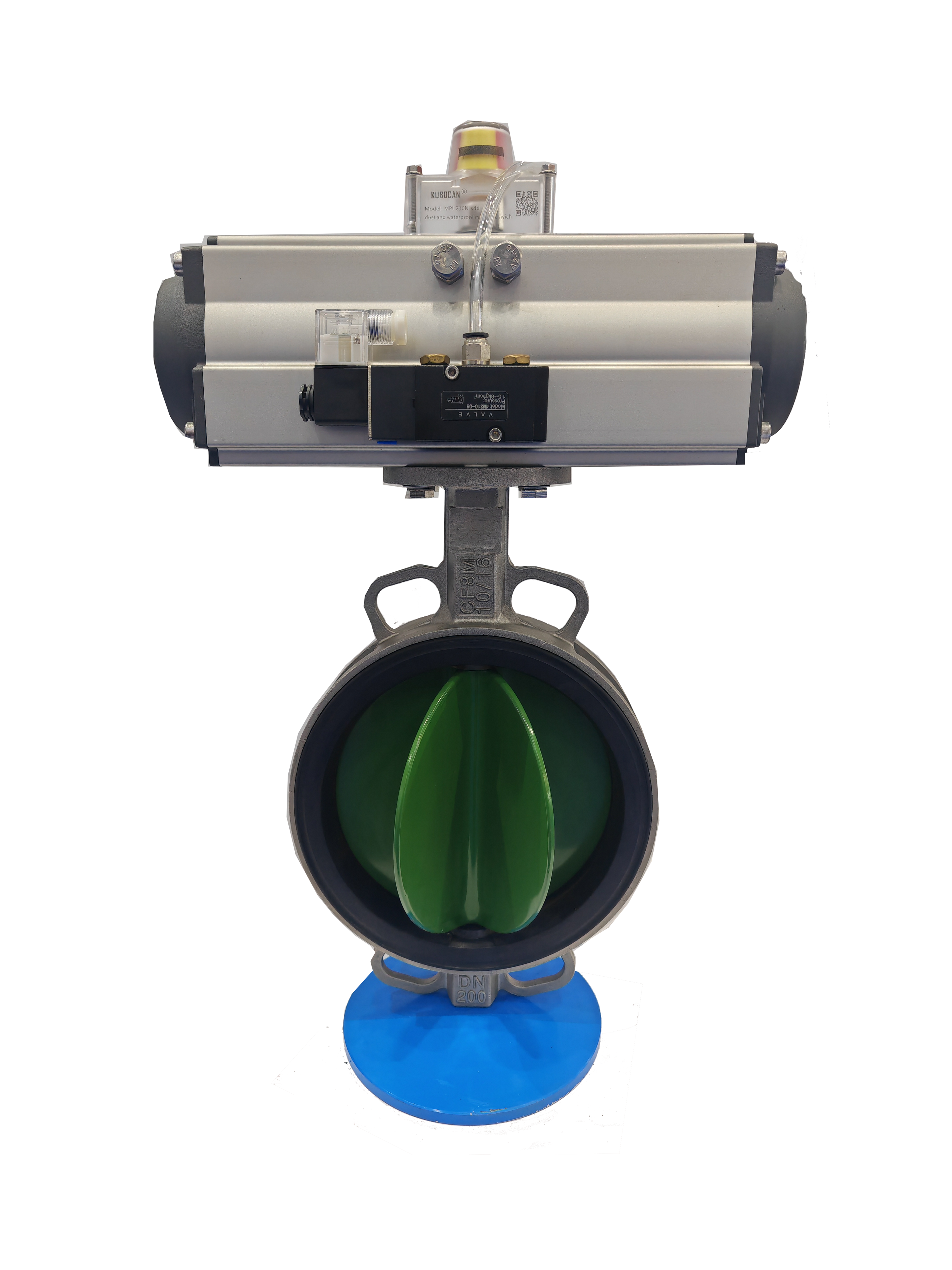
For larger valves or higher pressure ratings, a gear operator reduces manual effort and provides mechanical advantage.
Pneumatic/Electric
Automated actuators must be matched not just to torque but to stroke speed and fail-safe requirements.
There is also a thermal consideration that affects torque in service. A valve that closes easily at ambient temperature may become difficult to operate after reaching 500°C, as differential expansion changes the interference between disc and seat. Quality manufacturers publish torque tables that account for operating temperature, and these should be consulted rather than relying solely on room-temperature values.
05 What Installation Practices Prevent Premature Failure?
A precision-engineered hard-seal valve can be compromised by careless installation. The sealing surfaces are machined to tolerances measured in thousandths of an inch; contaminants, misalignment, or improper handling can destroy that precision before the valve ever sees service.
Protecting the Sealing Surfaces
Hard-seal butterfly valves should remain in their protective packaging until the moment of installation. The disc edge and seat ring are vulnerable to nicks and scratches that create leakage paths. Even a small burr on the disc edge can prevent proper seating across the entire circumference. During handling, the valve should be lifted by the body or flange holes—never by the actuator, shaft, or disc [citation:6].
Pipe Alignment and Flange Bolting
The valve must be installed between flanges that are parallel and properly aligned. Forcing a valve into misaligned flanges distorts the body and seat, compromising the sealing geometry. Flange bolts should be tightened in a star or crisscross pattern to distribute clamping force evenly. Over-tightening one side before the other can warp the seat ring even in a robust casting.
For welded connections, the valve should be removed from the line or at minimum fully opened during welding to prevent weld spatter from contacting the sealing surfaces. The heat from welding can also distort nearby components if the valve is left installed without thermal protection.
Commissioning Checks
- Cycle the valve from fully open to fully closed several times before pressurizing the system. Listen for smooth operation and check that the actuator reaches both end positions.
- Verify stroke: The disc should rotate exactly 90 degrees. Partial stroke leaves the valve neither fully open nor fully closed, causing leakage or excessive pressure drop.
- Leak test: With the system at operating temperature and pressure, check for leakage at the seat. Small leaks may indicate insufficient seating torque or a damaged seat that occurred during installation.
- Document torque: Record the actuation torque at commissioning. A significant increase at future inspections indicates developing problems—thermal binding, contaminant buildup, or seat damage [citation:6].
Long-term reliability also depends on periodic exercising. A valve that remains in one position for months may develop thermal binding or contaminant accumulation on the sealing surfaces. Operating the valve through a full cycle at scheduled intervals helps maintain freedom of movement and reveals problems before they become failures.
06 Frequently Asked Questions
Specifying isolation valves for a high-temperature or abrasive ventilation system? The engineering team at Tanggu Shengshi Huagong can help you match valve materials and actuation to your exact operating conditions.
Contact Us